Let's start with the thing nobody says out loud
You want to bring a toy into sex with your partner. You've been thinking about it for weeks, maybe months. But the thought of actually asking makes your stomach drop.
What if they feel threatened? What if they think you're not satisfied with them? What if it gets weird and stays weird? These fears are completely real. And they're also not the conversation that's actually happening in your partner's head.
Why shame is the real problem, not toys
Most of the awkwardness around introducing lemon vibrators or any clitoral vibrators into partnered sex isn't about the toy. It's about the permission structure we inherited. For decades, sex toys meant something was broken in the relationship. A woman who wanted a vibrator was either unhappy with her partner or weirdly interested in things she shouldn't be interested in.
None of that is true. But the cultural imprint is deep.
What makes lemon vibrators different is that they're honest about what they are. They're not pretending to be something else. They're not a replacement for anything. They're an addition to an experience you're already having. When you approach the conversation from that angle, the whole dynamic shifts.
The actual reason your partner wants this too
Here's what research on partnered sex shows. Most partners want their person to feel good. Most partners also want their person to feel wanted, to feel like they're part of the decision, and to feel like the sex is mutually designed.
When you bring lemon vibrators into the conversation, you're saying: I want this experience to feel better for me, and I want you to be part of how that happens. That's not threatening. That's collaborative.
The fear that your partner will feel replaced is understandable. But lemon clitoral vibrators don't replace partners. They change what's possible. If your partner can't make you orgasm through penetration alone, a vibrator doesn't mean they've failed. It means you two are solving a problem together.
How to actually start the conversation
Timing matters more than you'd think. Don't bring this up mid-argument, when either of you is stressed, or right before or after sex (emotions are running too high). Pick a calm moment. Maybe a walk. Maybe over coffee.
Here's the frame that works: "I've been thinking about ways to make sex feel even better for both of us. I'd like to try using a vibrator sometimes. I'm interested because [insert your actual reason: it feels good, I want to orgasm more reliably, I want to try something new]."
Notice what's missing: apologies, disclaimers, reassurance that your partner is enough. You're not asking permission. You're sharing a preference.
If your partner pushes back, don't defend the vibrator. Ask what the actual concern is. Often it's not the toy at all. It's anxiety about what it means, or feeling like they're not being consulted, or genuine discomfort with the topic.
Those conversations are real conversations. Have them. Listen. Be honest about what you want and why.
Why lemon vibrators make this easier, not harder
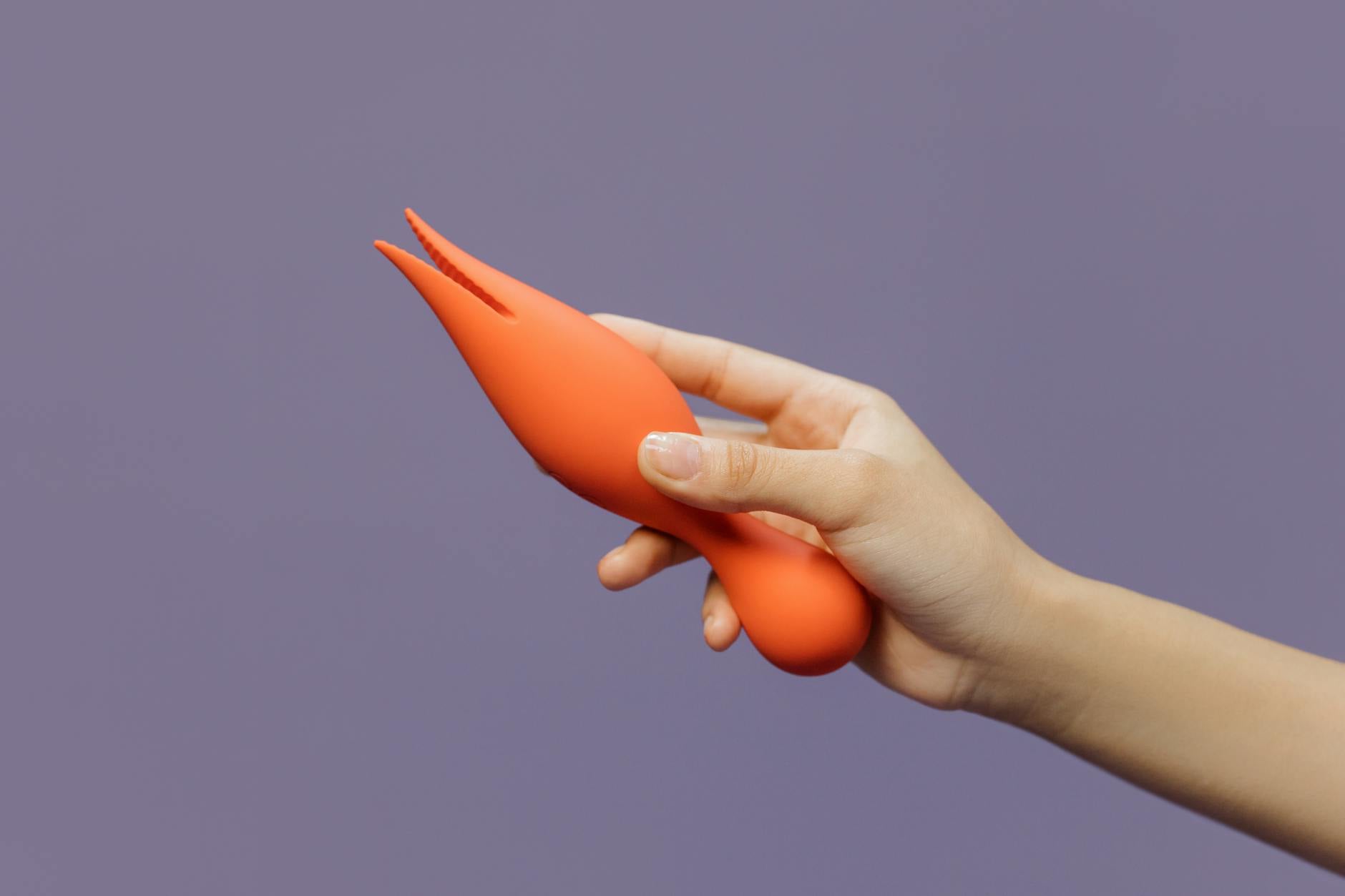
Lemon vibrators have a specific design benefit that matters in this context. They're designed for external clitoral stimulation only. They're not penetrative. This means they literally cannot be mistaken for anything that replaces your partner.
When you bring a lemon clitoral vibrator into partnered sex, you're adding sensation, not replacing it. Your partner is still present. They're still involved. The vibrator is doing one job (stimulating the clitoris) while penetration or other forms of connection are happening simultaneously.
This matters because it makes the logistics simple. There's a clear role for the vibrator and a clear role for your partner. No confusion. No competition.
Also: lemon vibrators are intuitive. They work the way your body expects them to work. That removes a whole layer of awkward learning curve. You're not trying to figure out what you're supposed to feel or how to adjust. You turn it on and it does what it says it does. Your partner can see that immediately.
The first time you actually use one together
Don't make it a big production. Don't set it up like a performance. The most successful introductions happen when the vibrator is treated like any other part of the experience.
Start with foreplay you both already know works. Let arousal build naturally. Then, when the moment feels right, introduce the vibrator. Hand it to your partner if it feels easier, or use it yourself and let them watch. Either way, keep communicating. "That feels good." "I like when you do that and I use it at the same time." "Try this setting."
Make it collaborative in the moment. Your partner isn't a spectator. They're part of the choice about when, how, and what intensity.
If it feels awkward the first time, that's normal. You've invited a new element into something familiar. Awkward doesn't mean wrong. It usually just means you need one more attempt to feel natural.
What to do if your partner stays uncomfortable
Some people have real anxiety around toys. Some had weird experiences. Some have beliefs about what they mean for the relationship that don't shift easily.
If your partner continues to resist, you have to decide what that means for you. Can you live without this? Do you want to explore it alone? Do you want to talk to a couples therapist about the broader conversation around sex and trust?
All of those are legitimate choices. But here's the part that matters: your pleasure is not selfish. Wanting to feel good in your body is not a threat to your relationship. If your partner can't move on that, that's information. Use it.
How to reframe this for long-term couples
If you've been with your partner for years, introducing lemon vibrators might feel like you're saying something about the current state of the relationship. You're not. You're saying the relationship is good enough that you want to keep it interesting.
Long-term couples often fall into patterns that feel safe but boring. Introducing new elements, whether that's toys, positions, timing, or location changes, is how you keep intimacy alive.
Many couples who introduce vibrators together report that it actually deepens their connection. You're having a conversation you've never had before. You're trying something new together. You're explicitly choosing pleasure for each other.
That's not awkward. That's investment.
Practical boundaries that actually help
Once you're both on board, having clear boundaries makes everything easier. Discuss: Do you want to use it every time or sometimes? Will your partner always be involved or sometimes will you use it solo? What settings feel good? What doesn't? Are there things you don't want the vibrator to be used for?
These aren't restrictive conversations. They're clarity conversations. When both partners know what to expect, nobody's guessing. Nobody's anxious.
You might discover that you like using lemon vibrators sometimes with your partner and sometimes alone. You might use them during penetration or only during foreplay. You might prefer them in certain positions. None of that is failure. It's just information about what feels good.
The thing about pleasure and partnership
Honestly, introducing lemon vibrators into partnered sex is about way more than the toy itself. It's about whether you and your partner can talk about what feels good, ask for what you need, and make decisions together about sex.
If you can do that with a vibrator, you can do it with anything. You can ask for different positions. You can say what you actually like instead of performing what you think you're supposed to like. You can be honest.
That's the real transformation. The vibrator is just the opening.
People also ask
How do I know if my partner will be upset about me wanting to use a vibrator during sex?
You don't know until you ask. But statistically, most partners are not upset. Most partners are relieved that you're being direct about what you want instead of faking pleasure. If your partner gets defensive or angry when you ask, that's information about how your relationship handles vulnerability. That conversation is worth having, ideally with a couples therapist if it escalates.
Can we use a lemon clitoral vibrator during regular penetrative sex?
Yes. Most lemon vibrators are designed for external stimulation, which means you can use them during penetration without any conflict. Your partner can be inside you while you or they use the vibrator on your clitoris. This is actually one of the most straightforward ways to introduce vibrators into partnered sex because the roles are totally clear.
What if my partner wants to use the vibrator on me but I feel self-conscious?
Self-consciousness is normal the first time. It helps to remember that your partner is probably more focused on you feeling good than on analyzing your body. Most people feel more self-conscious than their partners actually are. Set a boundary that works for you (maybe you use it first while they watch, or you do it together in low light), and give yourself permission to feel awkward for one or two minutes. It usually passes quickly.
Is using a vibrator during partnered sex a sign that something is wrong?
No. It's a sign that you want to feel good and you're designing sex to make that happen. Sometimes couples introduce vibrators because someone isn't orgasming reliably. Sometimes they introduce them because the experience is already good and they want to try something new. Both are normal reasons. Neither indicates a problem.
How do I bring this up without making my partner think I'm not satisfied with them?
Be direct about what the vibrator actually is: a tool for sensation, not a replacement for your partner. Say something like: "I want to try using a vibrator sometimes. It's not about you not being enough. It's about exploring something new together." Then listen to their actual concern instead of over-reassuring. If they're worried, validate that, but don't apologize for wanting to feel good.
Should we buy a vibrator together or should I surprise my partner with one?
Buying together is usually easier because your partner has input and it doesn't feel like a surprise that might trigger defensiveness. Shopping together also makes it clear that this is a collaborative choice, not something one person is imposing. If you do want to introduce a specific vibrator like a lemon clitoral vibrator, you could mention it first and then let your partner be part of the actual purchase.
The closing thought
Introducing lemon vibrators into partnered sex is a conversation, not a transaction. It requires honesty, timing, and willingness to listen to your partner's actual concerns instead of the fears in your head.
Most of the time, that conversation opens doors instead of closing them. Your partner gets to know what you actually want. You get to experience pleasure without performing. The vibrator becomes a normal part of how you two make sex work for both of you.
That's not awkward. That's intimacy.
If you want to talk through how to have this conversation with your specific relationship in mind, reach out to us. We're here to help.