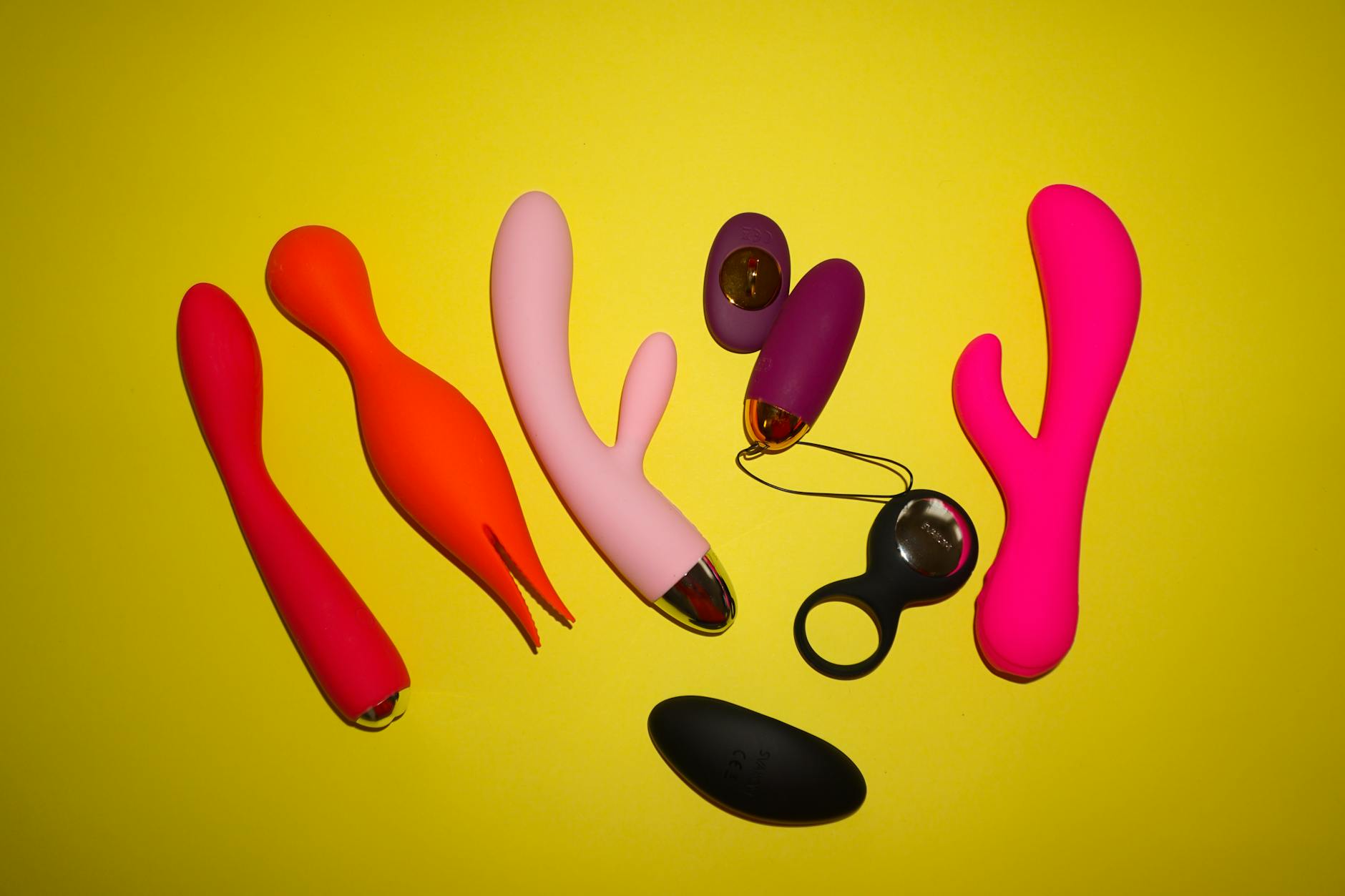
Here's what no one tells you about depression and desire
Depression doesn't make you broken. It makes you numb. That's actually an important distinction, and it changes everything about how you approach pleasure during a depressive episode.
When depression hits, your brain literally stops producing the neurotransmitters that create desire. Your clitoris still works. Your nervous system still responds to stimulation. But the want vanishes. You can have an orgasm while depressed and feel absolutely nothing emotionally. Or you can't build arousal at all. Both are real, both are neurochemical, and both are reversible.
Why lemon vibrators work differently when you're depressed
Most pleasure comes from mental anticipation. Desire builds in your brain before your body even registers touch. When depression flattens that anticipatory response, traditional foreplay or even manual stimulation can feel pointless. You're waiting for a spark that isn't coming.
That's where the design of lemon clitoral vibrators changes the game. They don't require mental buy-in the way partner sex does. They don't demand arousal as a prerequisite. You can lie flat, neutral, and let sustained suction do the physical work while your brain slowly catches up.
Lemon vibrators specifically use air-suction stimulation, which creates a different sensation profile than vibration alone. It's less demanding on damaged nervous systems and more likely to trigger a physical response even when mental desire is offline. That physical response, oddly enough, can sometimes unlock emotional engagement further down the line.
But here's the honest part: sometimes it won't. And that's fine.
Managing expectations during depressive episodes
If you go into using a lemon vibrator (or any toy) expecting it to fix your depression, you'll feel worse when it doesn't. That's not failure. That's you running up against the reality that pleasure isn't a mood disorder fix.
What toys can do is offer you a small window where something feels neutral or occasionally good when everything else feels flat. That window might last five minutes. It might happen twice a week. It might disappear entirely when your depression deepens. None of these outcomes mean you're doing it wrong.
Set a different goal: Can I have five minutes where my body feels anything? Not: Can I orgasm and feel euphoric? The second one is too high a bar when depression is present. The first one is achievable and sometimes even restorative.
Practical setup: remove the friction
Depression is exhausting. Building in effort kills the whole exercise.
Here's what I recommend to clients managing depression:
Keep your lemon vibrator charged and on your nightstand. Not in a drawer. Not in a box. Visible, accessible, zero effort to reach. Depression makes executive function expensive. Reduce activation cost to almost nothing.
Set a gentle timer for ten minutes. Depression loves infinite rabbit holes. A ten-minute boundary means you're not thinking "how long should this take." You just stop when the timer goes off, no guilt, no performance metric.
Use lube. Water-based is fine. Lube removes friction in the physical sense, yes, but it also removes the mental friction of wondering if you're doing it right. It signals to your nervous system that this is intentional, boundaried self-care, not desperate scrambling.
Consider doing this alone, even if you have a partner. Depressive numbness can make partnered sex feel like a transaction you owe someone. Solo pleasure, even when it doesn't feel great, is purely for you. That reframing matters.
When to add a partner to the picture
If you're in a relationship, depression becomes a two-person problem. Your partner might feel rejected or confused. You might feel guilty for not wanting them. Neither of those feelings is true, but they're common.
Honestly? Start with solo exploration first. When you're depressed, understanding your own response (or lack thereof) separately from someone else's needs is clarifying. Once you have a sense of what your body is doing on its own, you can communicate that to a partner.
If your partner wants to be involved, the lemon clitoral vibrator makes that easier than some alternatives. They can hold it. They can control pace. They're watching something happen (physical response) rather than waiting for permission or enthusiasm you can't manufacture. That's less emotionally loaded than traditional penetration or manual stimulation, which often carry a performance expectation.
But also. You don't owe partnered exploration while depressed. Solo pleasure is not a gateway to couple's sex. It's enough on its own.
The medication-pleasure intersection
Many antidepressants and anti-anxiety medications flatten sexual response as a side effect. It's a known, documented thing, and it's worth talking to your prescriber about if it's severe. Sometimes switching medications or adjusting dosage helps. Sometimes it doesn't.
If you're on medication that kills libido, using a lemon vibrator becomes less about pleasure-seeking and more about nervous system recalibration. You're training your body to remember that sensation is possible, even if the emotional weight isn't there yet. That's valuable solo work.
Rebuilding after depression lifts
Here's what's wild: many people find that their capacity for pleasure actually expands once depression eases. The numb period ends. Sensation comes back. And sometimes it comes back stronger than before, because you've essentially been doing low-intensity exposure therapy on your own nervous system.
When that happens, having already gotten comfortable with a lemon vibrator means you're not starting from scratch. Your body knows the pattern. Your brain has positive associations (or at least neutral ones) with the experience. That continuity matters.
The conversation with yourself
Depression talks. It tells you that you don't deserve pleasure, that you should feel guilty for your lack of desire, that something is broken beyond repair. None of that is true, and toys won't fix the lying part. That's what therapy and sometimes medication are for.
What a lemon vibrator can do is offer a quiet counter-argument. It says: your body still works. Pleasure is still possible, even if it doesn't feel good right now. You're not broken. You're depressed, which is different.
That might seem like a small distinction, but it's the difference between shame (I'm defective) and compassion (I'm struggling). And compassion, weirdly, is sometimes the first step back toward pleasure.
Frequently asked questions
Can I use a lemon vibrator while I'm on antidepressants?
Absolutely. Antidepressants don't prevent physical stimulation or orgasm. They can make both harder, but not impossible. If medication is making sexual response difficult, that's worth discussing with your prescriber. In the meantime, a lemon vibrator doesn't interact with medication. It's purely mechanical and electrical.
What if I use my lemon vibrator and feel nothing at all?
That's common and it's not failure. Depression numbs. Sometimes the only thing that happens is you spend ten minutes lying there and that's it. That's still ten minutes of self-directed attention, which is something. Some clients find that numbness to pleasure actually decreases over repeated, low-pressure exposures. Your nervous system slowly remembers. But sometimes nothing happens and that's okay too.
Should I tell my partner I'm using a toy while depressed?
That depends on your relationship and what you need. If you're in a committed partnership, honesty usually helps. Depression often makes partners anxious about what they're doing wrong. Knowing you're exploring solo pleasure for your own nervous system can actually ease that anxiety. But you're not obligated to share if it makes you feel more vulnerable than you already do.
Does using lemon vibrators actually help with depression or just the libido part?
It helps with libido only, and sometimes not even that. Depression is a brain chemistry issue. Pleasure tools are body tools. They're not treatment. If you're depressed, you need therapy, possibly medication, and community support. A lemon vibrator is optional additional care, not a substitute.
What if depression comes back and kills desire again after I've experienced pleasure?
It might. Depression is cyclical for many people. You might have weeks where pleasure feels accessible and weeks where everything is flat again. That's not regression. That's depression doing what it does. A lemon vibrator will be here if and when you want to try again. No judgment, no pressure.
How long should a session take when I'm depressed?
As short as you need it to be. Five minutes is fine. Ten is better. Thirty is overkill when you're depressed because executive function is already taxed. Set a timer. When it goes off, you're done. This isn't about duration. It's about consistency and removing the need to decide.