Here's the thing about combining toys and penetration
Most people try it once, something feels awkward, and they assume it's not for them. The truth? They're probably using it wrong. Combining a lemon clitoral vibrator with penetrative sex is one of the most reliable ways to reach orgasm during partnered sex. The catch is that it requires three things most people skip: actual positioning work, communication that happens before you're already turned on, and an honest understanding of what your body needs.
Let me walk you through the specifics.
Why this combination works so well
Penetration alone doesn't stimulate the clitoris directly for most people. So you get pressure, you get fullness, but you don't always get the external stimulus needed to cross the finish line. Add a lemon vibrator, and suddenly you have both elements firing at once. Your partner is providing one kind of sensation, and the toy is handling the clitoral stimulation that your body is actually seeking.
Here's the bonus: the vibration actually improves sensation during penetration itself. It's not a distraction. It's a multiplier.
The positioning that actually works
Let's start with the fact that not every position works equally well. Missionary and most variations allow plenty of space for toy access. Your partner is in front of you, and you can place the vibrator exactly where you need it. Cowgirl? Also excellent. You control depth and angle, so you can adjust around the vibrator. Spooning or side-by-side? Perfect for this setup. Your partner's body isn't in the way, and you have room to position the toy.
Doggy style and reverse cowgirl are trickier. The angle makes it harder to reach your clitoris comfortably, and your hand position gets awkward. Not impossible. Just more effort. If those are your preferred positions, you'll need to think about either shifting slightly or accepting that clitoral vibration might not be the move.
The golden rule: test positioning while you're both clothed and talking, not mid-sex. Lie together, place the vibrator (off) where you want it, and see if your partner's body leaves room for your hand. Adjust angle or position if needed. This takes five minutes and saves you from the frustration of realizing mid-momentum that something doesn't work.

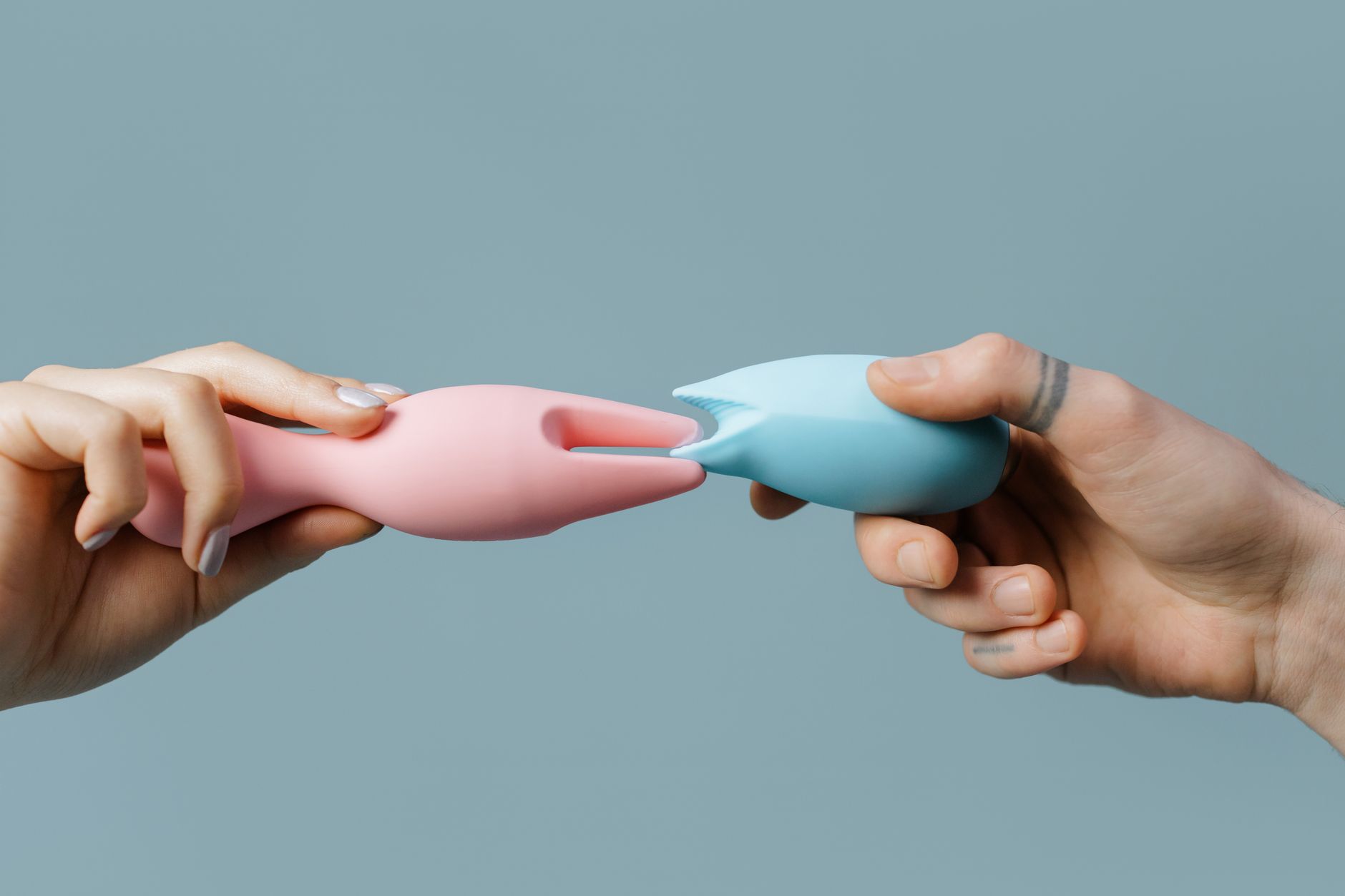
Photo by cottonbro studio on Pexels
Starting the conversation before you're in bed
This is the part most couples skip, and it's why the experience often falls flat. If you bring a lemon vibrator into penetration without discussing it first, you're asking your partner to adapt in real time while they're already focused on their own sensation and rhythm. That's unfair and it creates friction.
Instead, have the conversation fully clothed, somewhere neutral like over coffee or a meal. Say something like: "I've been thinking about using a vibrator during sex, and I'm curious how you'd feel about it." Listen to their response. There might be insecurity ("Does that mean I'm not enough?"), curiosity, or immediate enthusiasm. Any of those is workable. Insecurity needs a simple clarification: clitoral vibrators are about adding sensation to what's already happening, not about replacing anything your partner does.
Then talk logistics. Which positions feel comfortable? Does your partner prefer to hold the vibrator, or would you rather handle it? How does your partner feel about the sound? Some people find vibration sounds distracting; others don't notice. Talk about what happens if arousal stalls or if either of you needs a break. Having this map reduces the awkwardness of figuring it out during sex.
The rhythm question no one talks about
Here's what actually trips people up: your partner's thrusting rhythm and the vibration rhythm don't need to match, but they shouldn't fight either. If your partner is moving slowly and deliberately, fast vibration can feel jarring. If they're moving quickly, slow vibration can feel disconnected.
The easiest setup is usually this: your partner moves at whatever pace feels right for them, and you keep the vibrator steady. Not moving the vibrator around constantly. Just holding it at the angle that feels good and letting the vibration do the work. This way, your partner's rhythm stays independent and your sensation stays constant.
That said, some people love matching pace. Your partner thrusts, and you pulse the vibrator on and off in rhythm. It creates a unified sensation. The problem is that it requires coordination, and if either of you loses focus, the whole thing goes sideways. Start with the steadier approach. Once you're both comfortable, you can experiment with rhythm play.
Practical setup for your first time combining toys and penetration
Start earlier than you think you need to. Foreplay should be longer when a vibrator is involved, not shorter. Your body needs time to warm up so that the vibration feels good rather than overwhelming. Spend 15 to 20 minutes on arousal before the vibrator even comes out.
Introduce the vibrator while you're being touched manually or orally, before penetration happens. Let your body adjust to the sensation and rhythm while you're not also managing another element. Once penetration begins, the vibrator should feel like a familiar addition, not a surprise.
Start at a lower intensity setting. The Lemon clitoral vibrator has multiple modes, and you don't need the highest one. Mid-range is usually perfect. You can always increase later. And here's the thing: your sensitivity will change as your arousal builds. What felt intense five minutes ago might feel right once you're deeper into it.
Communication during: develop a simple signal system. A squeeze of your partner's hand means "that angle is working, keep it." A shift in your breathing means you're getting close. Your partner shouldn't have to guess. And you should feel free to say "slower" or "stop for a second" without it feeling like a failure.
When to use the vibrator during the experience
You don't have to use it for the entire duration. Many people benefit from building arousal with penetration alone for the first five to ten minutes, then adding the vibrator when they're already partway there. This creates a building sensation and often feels less intense than vibration from the start.
Other people need vibration from the beginning of penetration. Your body, your rules. The point is that you get to decide timing, not your partner and not some arbitrary idea of how sex "should" go.
Hygiene and toy care matter here
Before using any vibrator during partnered penetration, make sure it's clean. A fresh toy or one that's been washed thoroughly is non-negotiable. If you're moving from manual play to penetration, the toy should still be clean. This isn't complicated. A few seconds under warm water with a toy cleaner or gentle soap handles it.
After? Wash it again before putting it away. Penetration + vibrator means your toy comes into contact with multiple areas. Clean care isn't romantic or sexy. It's basic hygiene and it keeps everyone healthy.
The emotional piece is bigger than you think
Using a toy during partnered sex sometimes touches insecurity for either partner. Your partner might wonder if they're "enough." You might feel self-conscious about openly wanting something specific to your body. That's normal. It's also worth addressing.
Remind yourself and your partner that this is collaborative. You're not rejecting your partner. You're asking them to join you in the kind of pleasure that actually works for your body. For most partners, that's genuinely hot. They get to watch you experience something intense. They get to be part of creating that experience. That's connection, not rejection.
If insecurity lingers after a few conversations, consider talking it through with a therapist or relationship coach. Sometimes a neutral third party helps normalize things that feel charged between two people.
FAQ
Can I use any vibrator during penetration?
Technically yes, but not all vibrators are equally suitable. Larger wand vibrators can be cumbersome. Smaller, handheld lemon vibrators like the Lem are designed specifically for this purpose. They're easy to position, control, and hold steady while your partner moves. That's why they're so popular for couples play.
What if the vibration makes my partner lose their erection?
This happens occasionally, especially if your partner is sensitive to distraction or if the sound startles them. The fix is simple. Turn the vibrator off, reassure your partner that nothing's wrong, and give them a moment to refocus. Some partners adjust quickly. Others prefer using the vibrator in specific positions or moments rather than throughout. That's fine. You're finding what works for both of you.
How do I bring this up if my partner seems resistant?
Start with vulnerability. Say something like: "I want my pleasure to feel good during sex, and I think this would help. I'd like to try it with you." Then listen to the actual concern. If they're worried about performance, reassure them. If they're uncomfortable with toys in general, ask why and see if education helps. If they refuse after a genuine conversation, you might need to decide if this is a dealbreaker or if there are other ways to get the sensation you need.
Is it weird to use a vibrator if we already have great sex?
No. Good sex can become even better. A vibrator isn't a sign that something's broken. It's an enhancement, like adding a new ingredient to a meal you already love. Most couples find that incorporating toys deepens their intimacy, not threatens it.
Can I use a vibrator if my partner has ED or takes medication that affects arousal?
Yes, and it might actually help. Focusing on your pleasure can take pressure off your partner and refocus the experience on mutual sensation rather than performance. That shift alone sometimes helps with arousal. Plus, a vibrator gives your partner something to engage with visually and tactilely while you're getting the sensation you need. That's connection, not compensation.
What's the best position for this if we both want strong clitoral stimulation?
If both partners want clitoral stimulation, you'll typically need a toy situation that accommodates both of you. Some couples use two vibrators, or they alternate focus. The positions that work best are ones where both bodies have space, like side-by-side entry or modified cowgirl where your partner can access their own clitoris while you access yours. Communication about what you each need is essential.
The real takeaway
Combining lemon vibrators with penetrative sex works brilliantly when you plan it, communicate about it, and stay flexible about what actually feels good in practice. The first time might feel a little awkward. That's normal. By the second or third time, it becomes second nature. Most couples find that adding a vibrator shifts them from "we have sex" to "we have really good sex together." That's worth the small investment of planning and conversation.
If you want more guidance on using vibrators as a couple, our buying guide walks through choosing the right toy for partnered play. And if communication feels stuck, reach out. Sometimes talking through the specifics with someone trained in relationship dynamics makes all the difference.