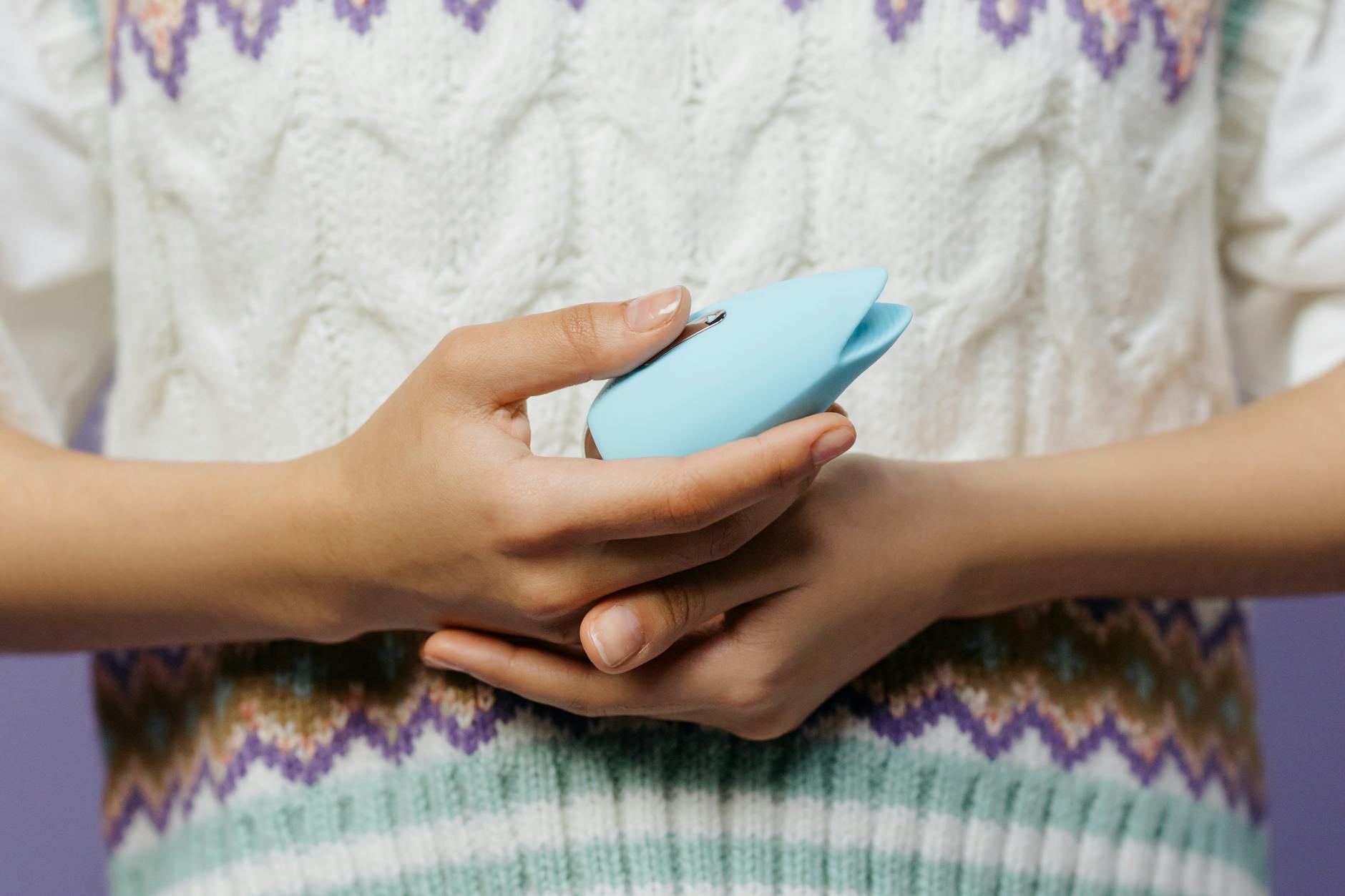
Let's start with what nobody talks about
Having multiple partners doesn't mean your pleasure gets divided equally among them. That's not how bodies work, and honestly, it's not how desire works either. What it does mean is that you're navigating different communication styles, different comfort levels with toys, and sometimes wildly different preferences about how you get off.
Some partners might enthusiastically co-use a lemon vibrator during partner penetration. Others might prefer you handle pleasure solo beforehand. A third might feel insecure if toys show up at all. These aren't failures. They're just different relationship containers with different rules.
The consent and communication framework
Here's what I've learned working with polyamorous and ethically non-monogamous folks: the toy conversation isn't really about the toy. It's about autonomy, trust, and what each person needs to feel secure in their specific connection with you.
Before introducing a lemon clitoral vibrator into any dynamic, have the conversation separately with each partner. Not "I want to use this with all of you." That's a reveal, not a discussion. Instead: "I've been thinking about my solo pleasure and also about what helps me feel good when we're together. I'm interested in exploring a toy. How do you feel about that?"
Their answer tells you everything. Enthusiasm is straightforward. Hesitation deserves a follow-up: "What would help you feel comfortable?" Some partners need reassurance that toys enhance rather than replace them. Others worry about hygiene or feel intimidated. Listen to the actual concern underneath the yes or no.
Solo use across relationships
One of the biggest shifts in multi-partner dynamics is reclaiming solo pleasure as distinctly yours. You're not warming yourself up for someone else's benefit. You're tending to your own nervous system, your own arousal, your own satisfaction.
This is where lemon vibrators become invaluable. They're portable, discreet, and fast. If you have 20 minutes alone before a partner arrives, a few minutes with your preferred pattern on The Lem can shift your entire baseline of pleasure. You're not anxious. You're not performing. You're just present.
Keep your vibrator separate from shared space if that helps you feel ownership over it. A lockable drawer, a small travel case, or even just a designated shelf sends a message to yourself and your partners: this is mine, and it's part of how I take care of myself.
When partners have conflicting comfort levels
Let's say Partner A is thrilled about toys. Partner B is neutral but curious. Partner C thinks they're emasculating. That's actually not uncommon, and you don't need to solve it all at once.
With Partner A, you can explore freely. Use lemon sexual toys during penetration, experiment with different patterns, build a whole integrated pleasure practice together.
With Partner B, you might introduce the toy slowly. Start by using it solo in their presence, no pressure to participate. Gradually, they might touch it while you're using it, or use it on you. Or they might stay in observer mode. All of these are okay.
With Partner C, you have options. You can use it solo before they arrive. You can have a deeper conversation about what makes them feel insecure. You can decide together whether toys are part of your intimate connection or not. That's a boundary you set together, and it's valid either way.
The key: don't perform the same pleasure narrative across all your relationships. Each partnership gets its own version of how toys fit in. That's actually how ethical non-monogamy works best.
Hygiene and ownership across partners
If you're sharing a device between partners, clean it before and after use every single time. Water-based lube, warm water, and a toy cleaner make this quick. But honestly? Most people with multiple partners prefer to have their own.
If budget is tight, the Lem is a solid investment. It's durable, rechargeable, and works across lots of different pleasure styles. One device, your device, used solo and occasionally with partners as you choose.
If you do share with a specific partner, establish the cleaning ritual together. It's not unsexy to say "Let me just rinse this really quickly." It's responsible and it's hot because it's honest.
The rhythm question
Different partners often have different sexual rhythms. One might want longer foreplay. Another might prefer quick intensity. A third might have a completely different timeline for arousal and orgasm.
Lemon clitoral vibrators solve for this beautifully because you control the timeline. If Partner A needs 45 minutes, you can use the vibrator during foreplay to build arousal before penetration. If Partner B wants 15 minutes total, you can warm up solo beforehand so you're already at baseline arousal when they arrive. If Partner C has an inconsistent schedule, you're never waiting on anyone else's readiness.
This is actually one of the biggest gifts of solo pleasure devices in non-monogamous spaces. You become less dependent on partners' performance and timing. Your orgasm isn't hostage to someone else's stamina or interest.
When to mention it and when to keep it private
You don't owe every partner a detailed account of how you touch yourself. That's your business. But you do owe transparency about toys in shared intimate moments.
Solo use: completely private unless you want to share.
Use with a specific partner: discuss with them first.
Use across multiple partners in different relationships: no need to tell Partner A about your toy practice with Partner B. That's compartmentalization, not deception.
Use that might come up in conversation with a partner: bring it up early so it's not a surprise mid-intimacy.
This might sound like splitting hairs, but it matters. Your pleasure belongs to you. How you navigate it within each specific relationship is about respect and communication with that person, not about confessing every detail to everyone.
The confidence factor
Here's what I see consistently with folks balancing multiple partners: when you have a reliable solo pleasure practice with a tool you love, you show up differently in each relationship. Less needy. More present. Less resentful if one partner isn't delivering the exact kind of stimulation you crave.
You know your body. You know what works. A lemon vibrator is just evidence of that self-knowledge. It's not a failure of partnership. It's a foundation for better partnership.
So if you're juggling multiple connections and wondering whether toys fit in, the answer is usually yes. But on your terms. With each partner, in each container, in a way that honors your autonomy and their comfort level.
People also ask
Is it okay to use the same lemon vibrator with multiple partners?
Yes, if you both consent and clean it thoroughly between uses. Many people prefer to keep their own device and use it solo, keeping that pleasure separate from partnered sex. That's equally valid. The important part is the conversation, not the logistics.
How do I bring up toys if a partner seems insecure about them?
Start with empathy for the feeling underneath. "I've noticed you seem hesitant about this. I care about how you're feeling. What would help you feel secure?" Often the concern is about being replaced or not being enough. Reassurance isn't a lie. A toy adds to your pleasure. It doesn't subtract from them.
Can I use a lemon clitoral vibrator in multiple relationships without everyone knowing?
Yes. Your solo pleasure practice is your own business. What matters is transparency about toys you use during partnered sex. If you're using one solo before a partner arrives, that's preparation, not deception.
What if one partner wants to use it and another doesn't?
That's normal and it's fine. You don't need uniformity across relationships. With Partner A, the vibrator is part of your intimate toolkit. With Partner B, it stays private. Different relationships, different agreements.
How do I prevent a lemon vibrator from becoming a point of tension?
Communicate early and often. Don't surprise anyone. Listen to hesitations without defensiveness. And remember: your pleasure isn't negotiable, but how you navigate it within a specific relationship absolutely is.
Is it selfish to prioritize my own pleasure with a toy if a partner objects?
There's a difference between "I'm not using toys in this relationship" and "I'm not using toys at all." Solo pleasure with your own device is not selfish. It's self-care. What you do during shared intimate time is worth discussing.
The real talk
Navigating pleasure across multiple relationships takes intention and honesty. Not just with your partners, but with yourself about what you actually want and what you need to feel good.
A lemon vibrator isn't going to solve communication gaps. But it will give you a reliable, dependable way to stay connected to your own pleasure while you're managing multiple relationship containers. That baseline of self-knowledge and self-care makes everything else easier.
If you're ready to have these conversations or you're figuring out what tools serve you best, we're here. Your pleasure matters. So does everyone's comfort. The two can coexist.
Ready to explore further? Check out our guide on how to use lemon vibrators during partner penetration or rebuilding intimacy after relationship conflict. And if you have questions about navigating these dynamics, reach out.